Hair fall can mean shedding from the root, visible thinning, patchy loss, or breakage along the hair shaft, and each problem calls for a different response. By the end, you will know what a safe consultation and salon treatment involve, which benefits are realistic, and when a dermatologist should take over.
Key takeaways
- Separate shedding, thinning, recession, patchy loss, and breakage before choosing treatment.
- Expect consultation, scalp assessment, cleansing, treatment application, massage, and aftercare guidance.
- Salon care improves hair feel and appearance; medical causes require clinical evaluation.
- Seek medical advice for sudden patchy loss, scalp inflammation, or rapid progression.
Start by Identifying What You Mean by Hair Fall
Before any product is applied, a hair treatment consultation should establish whether the complaint is shedding, thinning, recession, patchy loss, or breakage. These are different problems, and a conditioning or scalp treatment cannot address them in the same way.
The consultation should record:
- When the change began, whether shedding is constant or sudden, and how much hair you notice during washing or brushing.
- Baseline photographs showing the front hairline, parting, crown, and affected areas in consistent lighting.
- Recent fever or illness, surgery, childbirth, rapid weight loss, restrictive dieting, major stress, new medicines, and family history of pattern hair loss.
- Tight hairstyles, extensions, bleaching, straightening, heat use, brushing habits, and other practices that could cause traction or shaft breakage.
- Scalp symptoms, including itching, scaling, redness, pain, tenderness, pustules, or smooth bald patches.
Visual inspection of the scalp and hair shaft helps separate diffuse shedding, pattern loss, traction, dandruff-related inflammation, and breakage mistaken for hair fall. A salon can provide cosmetic support, but it cannot diagnose thyroid disease, iron-deficiency anaemia, infection, alopecia areata, or scarring alopecia.
Ask what the service will measure, when reassessment will occur, which reaction means stopping, and when a dermatologist referral is needed. A dermatologist may add a hair-pull test, dermoscopy, blood tests, or biopsy when indicated.
The Hair Fall Treatment Process, Step by Step
A complete hair fall treatment session starts with a consultation, not a product application. The hair fall treatment process in Zirakpur should establish whether you have root shedding, visible thinning, receding, patchy loss, traction damage, or breakage.
1. The consultation records when shedding began, recent illness or fever, childbirth, stress, diet changes, medicines, family history, chemical services, tight hairstyles, itching, scaling, pain, or sores. Ask for baseline photographs under consistent lighting.
2. The practitioner visually examines the scalp and hair shaft for diffuse thinning, pattern loss, broken strands, dandruff-related inflammation, traction damage, or patches. A salon cannot diagnose thyroid disease, iron-deficiency anaemia, infection, alopecia areata, or scarring hair loss; a dermatologist may need a hair-pull test, dermoscopy, blood tests, or biopsy.
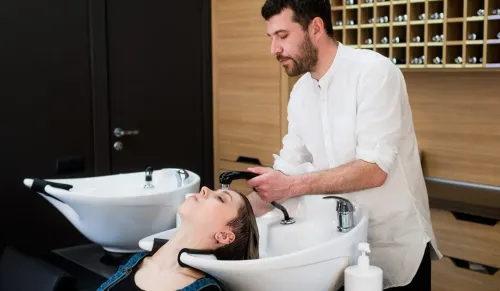
3. The hair is cleansed with a suitable shampoo to remove oil, buildup, and flakes. Scrubbing aggressively can irritate an inflamed scalp and increase breakage.
4. A selected mask, serum, scalp lotion, or conditioning treatment is applied to the scalp, lengths, or both. Keep product away from broken skin and stop if burning, swelling, or intense itching develops.
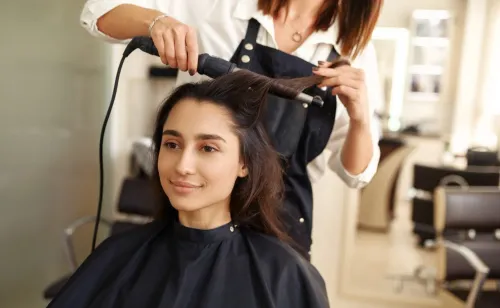
5. The treatment remains for its stated processing time, then is rinsed thoroughly. Hair is towel-dried and styled with low heat to limit additional damage.
6. Aftercare covers washing frequency, gentle detangling, heat limits, and the review date. Track shedding, breakage, scalp symptoms, and photographs; persistent or worsening loss needs dermatology referral rather than repeated salon sessions.
Which Benefits Are Cosmetic and Which Take Longer?
The main hair fall treatment benefits are cosmetic at first: a cleaner scalp, less tangling, softer strands, and easier styling. A salon service can improve how hair looks and feels immediately, but it cannot promise regrowth or prove that shedding has stopped.
| Sign to track | Immediate cosmetic change | What to assess over time |
|---|---|---|
| Shedding | Loose hairs may look less noticeable after cleansing | Compare the amount seen during washing and brushing across several weeks, not after one day |
| Breakage | Fewer snapped hairs and less frizz | Check whether short broken pieces and split ends decrease |
| Softness | Hair feels smoother and more manageable | Note whether softness lasts between washes without causing greasy buildup |
| Regrowth | Hair appears fuller after styling | Look for fine, tapered new hairs in thinning areas over months, not fuzzy broken ends |
Take baseline photographs before treatment using the same parting, lighting, distance, and dry-hair condition every four weeks. Separate root shedding from breakage: a full-length hair may have a small white bulb, while breakage leaves shorter pieces without one.
If shedding increases, thinning progresses, or bald patches appear, stop judging the result as a salon success and seek a dermatologist. A salon treatment is supportive care; it cannot diagnose thyroid disease, iron deficiency, infection, autoimmune hair loss, or pattern hair loss.
Repeated sessions should have a review date and a measurable goal, rather than relying on shine alone.
How to Choose Between Salon Care and Medical Treatment
A salon session is a useful supportive choice when your main concerns are dryness, tangling, frizz, breakage, scalp cleanliness, or hair that looks dull before an event. Complete makeover services in Zirakpur can improve manageability and temporary appearance, but shampoo, masks, oil massage, or spa treatments cannot reliably reverse genetic hair loss or correct disease.
| Option | What it can address | Choose it when |
|---|---|---|
| Salon care | Softness, shine, styling, tangling, dryness and breakage | You want cosmetic improvement and have no warning signs |
| Dermatology | Pattern loss, patchy loss, inflammation, infection and unexplained shedding | Hair is thinning at the scalp, falling in patches, or shedding persists |
| Minoxidil | Certain pattern-hair-loss cases | A clinician or pharmacist confirms it suits your pattern and health history |
| Prescription treatment | Diagnosed conditions requiring medical therapy | A dermatologist assesses the cause; finasteride is mainly for male pattern loss and needs counselling about sexual and reproductive risks |
| Nutritional correction | Deficiency-related shedding | Blood tests identify low iron or another deficiency; do not self-dose supplements |
Treat “complete makeover services hair fall treatment in Zirakpur” as salon support unless a qualified dermatologist is involved. The Fashion Habib Smart Salon can be considered for cosmetic hair care, while persistent shedding deserves a medical comparison rather than repeated detox sessions.
Ask what will be measured, when photographs will be reviewed, and which reaction requires stopping treatment.
Safety Checks, Referral Signs, and the Right Follow-Up
Before another session, confirm what was applied, how long it stayed on, and what improvement will be measured. A hair treatment consultation should also record baseline photographs in the same lighting, because memory cannot reliably show whether shedding or thinning has changed.
1. Ask about allergies, pregnancy or breastfeeding, current medicines, recent chemical services, and scalp problems. Do not apply a product over broken skin, open sores, active pustules, or a painful, inflamed scalp. Stop immediately for burning, facial swelling, hives, blistering, breathing difficulty, or worsening pain, and seek urgent medical help for breathing difficulty or swelling.
2. Request a dermatologist referral for sudden heavy shedding, smooth bald patches, a rapidly receding hairline, eyebrow or eyelash loss, scarring or shiny scalp, bleeding, pus, severe scaling, or persistent itching.
Ongoing fatigue, weight change, menstrual changes, or shedding after restrictive dieting also needs medical assessment; a salon cannot diagnose thyroid disease, iron deficiency, infection, or autoimmune alopecia.
3. Set a review date before leaving. Compare photographs, daily shedding, breakage, scalp comfort, and new density at about 6 to 12 weeks, not after one visit. Stop repeating the hair fall treatment process in Zirakpur if symptoms worsen or no explanation is emerging.
Do not accept finasteride as a salon remedy; a qualified clinician must assess whether it is appropriate and explain its reproductive and sexual risks.
Frequently asked questions
How do you identify what type of hair fall you have?
Check whether you are experiencing shedding, gradual thinning, hairline recession, patchy loss, or breakage. A hair treatment consultation and scalp assessment help distinguish these problems.
What happens during a hair fall treatment process?
The process can include a consultation, scalp examination, cleansing, treatment application, massage, rinsing or removal, styling, and personalised aftercare instructions.
Which hair fall treatment benefits appear quickly?
Conditioning, reduced dryness, improved softness, smoother styling, and a cleaner-feeling scalp can appear quickly. Reduced shedding or restored density takes longer and depends on the cause.
When should you choose medical treatment instead of salon care?
Choose medical evaluation for sudden or rapid loss, round bald patches, scalp pain or inflammation, heavy scaling, or hair loss linked to illness or medication. Salon care suits cosmetic maintenance and hair-fibre breakage.
What follow-up is needed after hair fall treatment?
Track shedding, scalp symptoms, hairline changes, and new patches. Follow the recommended schedule and seek referral when symptoms worsen or fail to improve.